

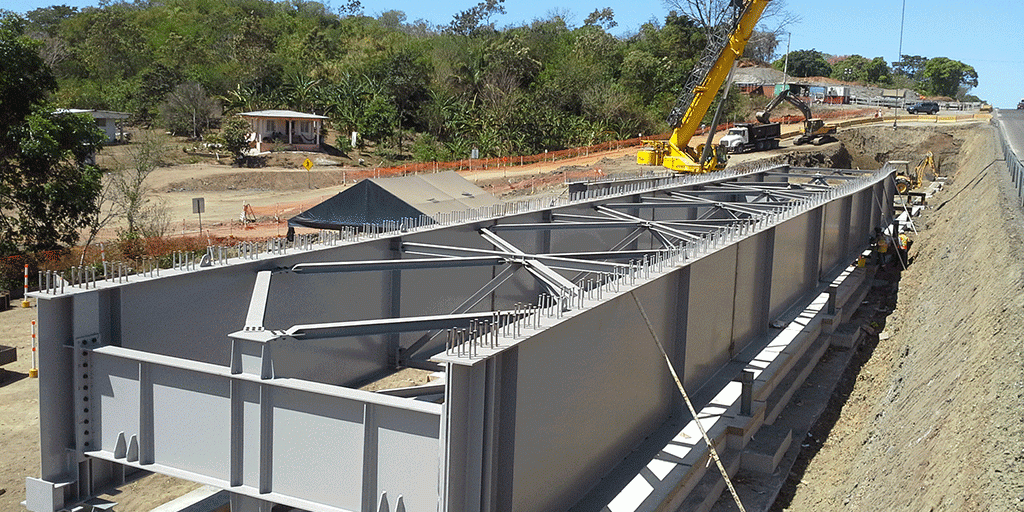
Steel is a material widely used throughout the world for the construction of bridges, from the largest to the smallest. It is a versatile and effective material that provides efficient and sustainable solutions. Steel is widely used in the construction of railway bridges, pedestrian bridges and road bridges.
The advantages of metal bridges
Modern steel bridges take advantage of the latest advances in automated manufacturing and construction techniques. They are capable of providing economical solutions to the demands of safety, fast construction, aesthetics, shallow construction depth, minimum maintenance and flexibility in future use.
The high strength / weight ratio of the steel minimizes the structural weight of the superstructures and, therefore, minimizes the costs of the structure, which is particularly beneficial in poor ground conditions. The minimum weight is also an important factor in the cost of transportation and handling of the components.
Another advantage is that steel is an easily recycled construction material, therefore, choosing it as a construction material for bridges represents a sustainable management of natural resources. When a metal bridge reaches the end of its useful life, the beams can be cut into manageable sizes to facilitate demolition and returned to steel mills for recycling. About 99% of structural steel goes back to the steelmaking process where it is used to create new products or is reused. There is no degradation in the performance of recycled steel.
Metal bridges have very good scores on all sustainability measures and offer a wide range of economic, environmental and social benefits:
Economic priorities
- Efficient use of resources.
- Minimal interruption
- Durability
- Adaptability
Environmental priorities
- Recycling and reuse.
- Minimum load of CO 2 and energy.
- Minimum waste
- Light construction
Social priorities
- Sustainable communities
- Health and security
- Minimum impact
- Aesthetically pleasing bridges
The metal bridges and walkways have ample architectural possibilities. They can be made to look light or solid, and can be sculpted in any way. The high quality of the steel surface creates crisp and clean lines and allows attention to detail. Modern manufacturing methods can easily provide curvature in plant and elevation. The paint of the steel structure introduces the color and contrast, and the repainting can change or refresh the appearance of the bridge.
Steel is the most versatile and effective material for bridge construction, capable of transporting loads in tension, compression and cutting. Structural steels are used in bridge superstructures from the smallest to the largest. There is a wide variety of structural forms available to the designer, but each of them is essentially divided into one of four groups; beam bridges, arch bridges, cable-stayed bridges and suspension bridges.
Bridges and walkways built by Metaldeza
Throughout these more than 30 years in Metaldeza we have carried out many metal bridges and walkways all over the world.
The fundamental requirements that we take into account to fully guarantee the potential durability of a steel bridge include among others:
- An understanding of the corrosion process.
- Good design and detail.
- Preparation of the complete surface
- Use of high quality coatings.
- Correct coating application
- Appropriate specifications
- Inspection and quality control.
All the bridges manufactured by Metaldeza are protected against corrosion by the use of paint coatings. Protective paint systems consist of primer, intermediate layer and topcoat.
To finish, we cite some projects of bridges and metal walkways that we carried out in these years.
-
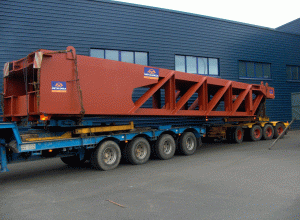
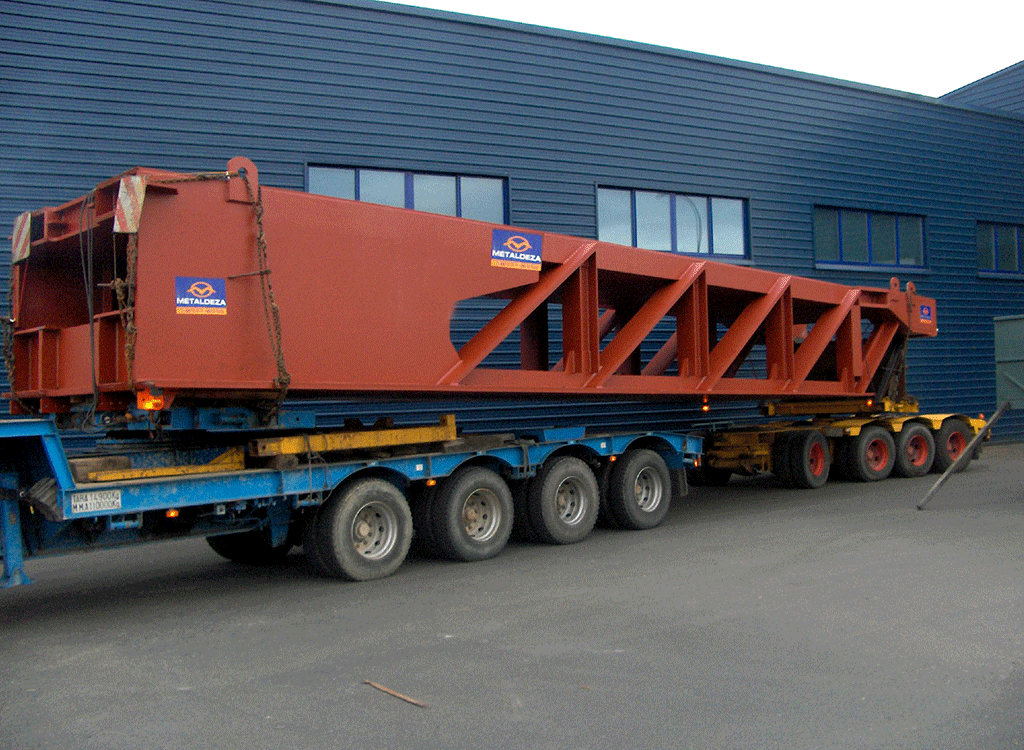
- Vigas Estación del AVE en Sants (Barcelona)
-
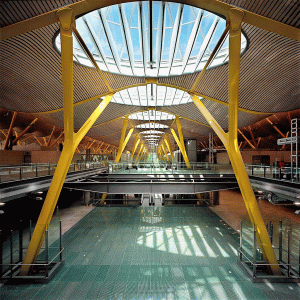
- Puentes de cañón en T4 Aeropuerto de Barajas-Adolfo Suárez

-
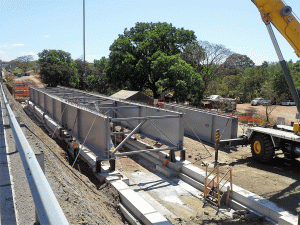
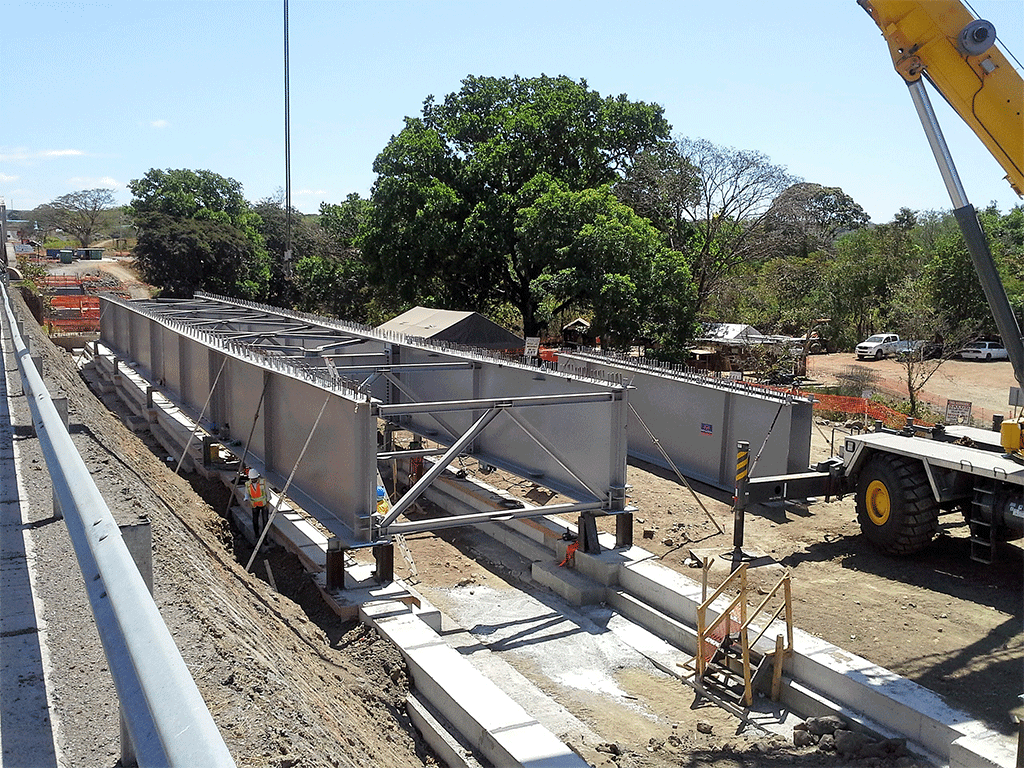
- Puente sobre río San Pablo en la carretera Panamericana.
-
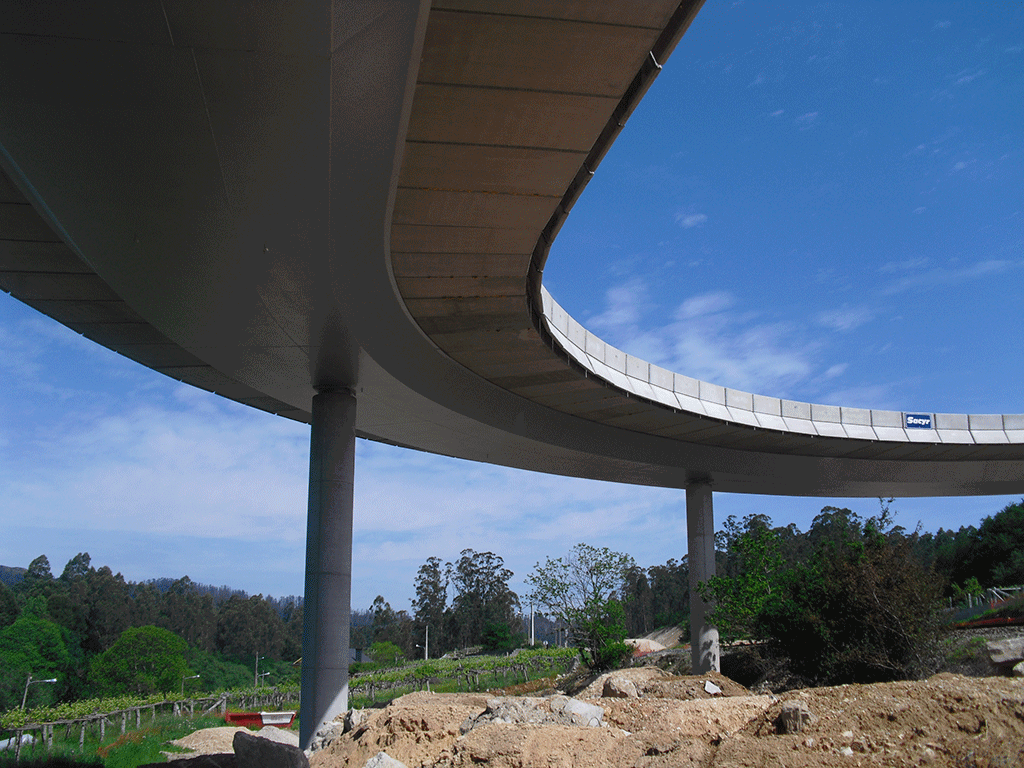
- Puente sobre línea del AVE en Pontevedra
-
- Puente de Alpera en Albacete
-
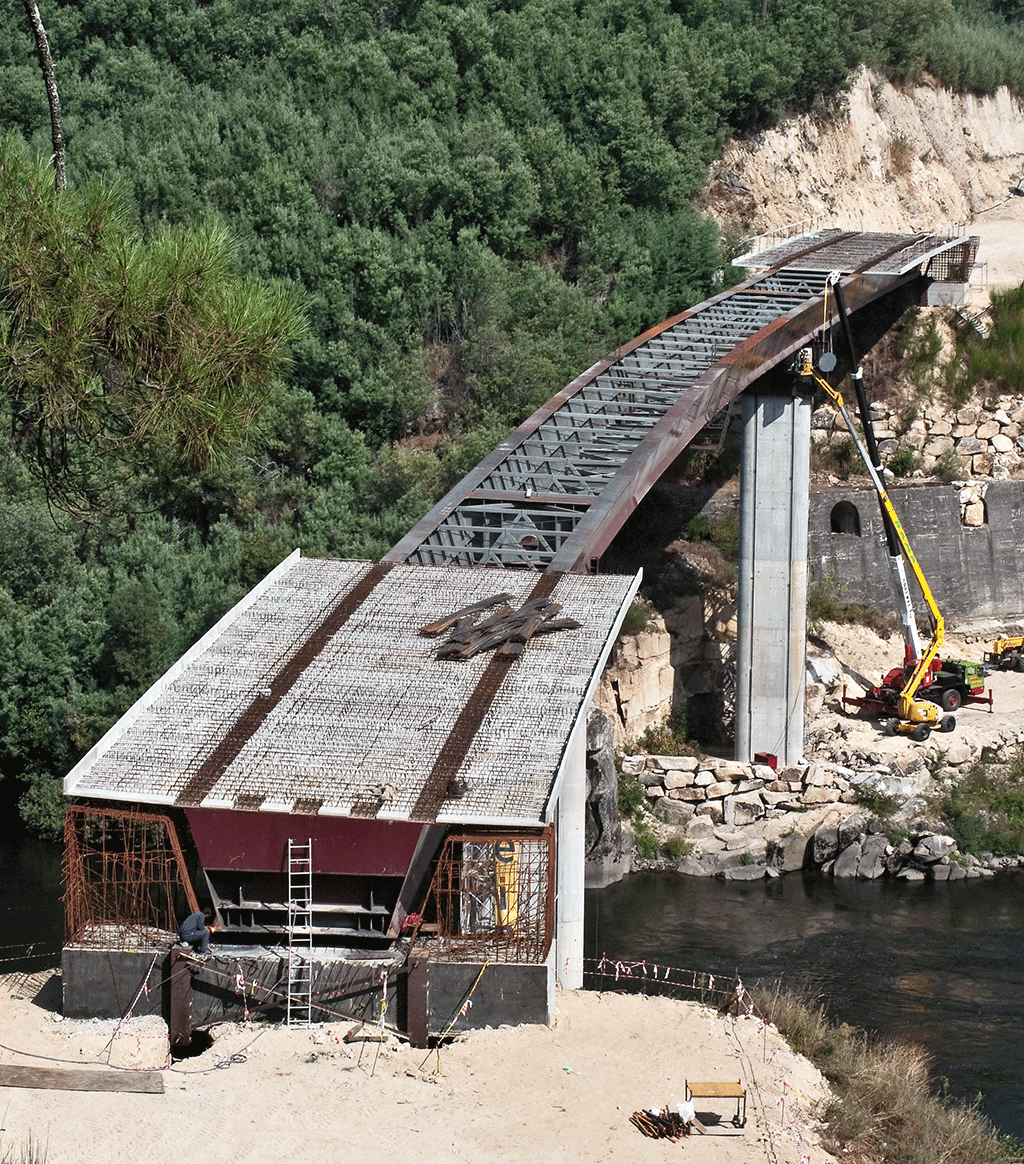
- Viaducto Castrelo do Miño
-
- Puente sobre río Barbaña

-
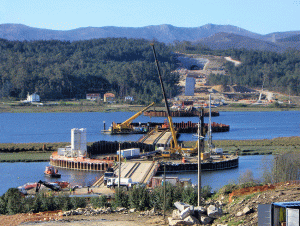
- Pantalán Viaducto sobre el río Ulla en Catoira